
- Home
- John Creasey
Gideon’s Sport g-1 Page 19
Gideon’s Sport g-1 Read online
Page 19
“Well, sir, if we had a thousand men in the ground, stationed on the gangways at the end of each row — I had a word with the M.C.C. Secretary, sir, and a thousand would just about cover it. If our chaps squatted on the gangway steps, the moment the demonstration started they could each just take one man. Or woman. I mean — sir, I know it probably wouldn’t work like clockwork, but when you come to think, the demonstrators are bound to want to invade the pitch, so they’re likely to move towards the gangways, so as to reach the pitch, anyway — you see?”
He almost blushed at that remark, but collected himself again and rushed on: “Truly, sir, it shouldn’t be too difficult. And if we had a Black Maria at each of the exits — well, we could have the whole mob under lock and key within an hour, and the game would hardly have been interrupted!”
Gideon could see the picture as Bligh unfolded his plan; and the more clearly he saw it, the more he applauded. Bligh himself, having stopped, could hardly now contain his eagerness or his anxiety. And it came to Gideon that not only was this man good and thorough: he was absolutely dedicated. He had never known a man who deserved encouragement more.
Slowly, he nodded, and relief passed like sunlight over Bligh’s face.
“It could work like work, if all your deductions are right,” Gideon told him. “We’ll give it a go.” He wondered how Bligh managed to keep his elation under control, but he did. “You’ll need to have all the men there by three-thirty, mostly in plainclothes. Better have some earlier, in fact, in case we’ve guessed wrong about the timing. You can have the gates cordoned off by uniformed men. I’ll send instructions to the Divisions and we’ll use everyone we can from here. And thanks, Bligh — it could be a major success.”
“My God, I hope it is!” Bligh exploded, at last. “Thank you, sir!”
Gideon nodded dismissal, and Bligh went to the door as if he were sailing on a cloud. Then he turned, his expression completely altered,
“I only wish I’d been there to save the American, Rudge, from being hurt-they say he’ll have to scratch. But P.C. Donaldson did a very good best in the car park, sir.”
“Yes,” Gideon nodded. “Yes.” And then sat back and waited for Hobbs to bring Jacobus in.
That was the moment when the committee at the All England Tennis Club, sitting in the secretary’s office at Wimbledon, had gathered to discuss a special problem. For the first time in years, there had been no stoppages because of rain and all the competitions were well ahead of schedule. The record crowd of last year looked like being beaten comfortably, and there was still a week and two days to go. No one had expected a call to the secretary’s office and all were anxious to go and watch the games.
“There is just the one matter, gentlemen,” the secretary, Major Cartwright informed them. “It is in the form of a letter from one of the competitors — Mr, Barnaby Rudge, from Alabama.”
The sixteen men sitting round the table all showed a sudden interest. Two, collecting papers from the table, stopped and went still. The chairman said: “The man who had trouble in Number 3 Court?”
“That’s the kind of thing we really don’t want,” remarked a committee man.
“Wasn’t he hurt?” someone else asked. “Attacked, or something? These colour prejudices —”
“Perhaps you will read the letter, Major,” invited the chairman.
“It’s very short,” Cartwright stated, and held it up so that all could see the very large, black, schoolboyish handwriting. “It says: I respectfully request the Committee to enable me to play my next round on Monday next, when my injuries will be recovered.”
There was silence as Cartwright sat down. The chairman took the letter and read it aloud again; then murmured thoughtfully: “I wonder what rearrangement of matches it would mean?”
“Not too many, I think,” said Cartwright, at once.
“No more than if we’d had three days of rain,” offered another man.
“But we really must leave it to the Referee and his committee.” Cartwright looked towards a big, powerful-looking man: the Referee or Manager of the Tournament. “He has all the rearranging to do.”
“And think of the effect on the other competitors,” warned a small, bald-headed man.
“It would affect only Cyril Wallers, who’s due to play Rudge tomorrow,” stated the Referee, obviously fully briefed.
“Wallers has a doubles and a mixed doubles,” remarked the first objector.
“He might be able to get them played off first — might be glad to,” put in a man who hadn’t spoken. “I think we should try.” He looked at the Referee. “Can we, Ben?”
“If we make it clear that the match must be played on Monday,” the Referee said, judiciously, “I think we can do it quite comfortably. I’m sure Cyril Wallers would suggest that, if he knew it would help. There is a great deal of sympathy for Rudge among players and spectators alike and I feel this is most certainly a case where we should try. I’d like your approval, though, gentlemen?”
There was a pause, as the chairman looked first in one direction and then in the other, before saying: “I think we can make that unanimous, then. Thank you. You’ll let him know, Ben? Good. Now, with a little luck, we’ll have time to see the Lavis-Collis match on the Centre Court!”
Barnaby Rudge had an aura of radiance as he read the letter, delivered to him by hand only half-an-hour later. And Willison could hardly speak, he was so relieved. Half-an-hour later still, Barnaby was with the young doctor, who was examining the wrenched shoulder. It was so painful that it was almost ludicrous to think it might be better in time.
“But the X-ray shows there’s nothing broken,” Dr. Miller pointed out. “We’ll see what my magic can do.” He glanced down at Barnaby’s leg, without adding that he was still more worried about the shin injury than the shoulder.
Very slowly, very tremblingly, Sebastian Jacobus looked at Gideon across Gideon’s desk, and said: “I’d have done it for nothing. I’d be glad to do it again. I didn’t need paying for putting that black bastard off the court! They shouldn’t be allowed —”
“That’s enough” Gideon interrupted coldly. “You were paid to attack Rudge. The money is a clear indication of that. We know you didn’t place any bets that day and we know you have heavy gambling debts at the Gotham Casino and others. Who paid you, Jacobus? Don’t waste any more time.”
There was silence, before Hobbs said: “That Spratt crew wouldn’t keep so quiet. They’re not worth anyone’s protection.”
Jacobus swung round, his eyes blazing, and cried: “How did you know it was Spratt? Who the hell told — ?” And then broke off, realising how completely he had been tricked.
CHAPTER TWENTY
Clean Sweep
At twenty minutes to five that afternoon, the South African captain turned a fast yorker from England’s most consistent bowler to the leg side, and two English fieldsmen raced for the red ball to try to cut it off from the boundary, and so save one, if not two, runs.
Until that moment, the scene was typical of Lords and as near idyllic as it could be. Here were the best cricketers England had, playing in the game which had been born not fifty miles from this spot; eleven men, bronzed from the bright summer, clad in white which showed stark against the emerald-green of the pitch and outfield — a green maintained by a miracle of groundsmen’s skill and patience. And there were two of their opponents from South Africa, a country which had inherited the game so long ago, and now could field a team on equal terms with England’s own.
Nearly thirty thousand people watched — as many as the ground would hold.
Every seat was filled. Every patch of grass between the front seats and the wooden boundary was filled, too; mostly with young boys. It was hot. Sellers of score-cards moved among the crowd in their constant quest for business, Around by the newly built Tavern, hundreds stood elbow to elbow, beer-glasses in their hands.
The stands had all been painted for this season, and despite the multitude, everythin
g looked spick and span. Women in their gayest dresses, old and young men in their shirt-sleeves, watched the little red ball and the two men racing towards it and the other two running between the wickets — adding to a total already ominous for England: 163 runs for two men out. Every eye, save those upturned in drinking or down-turned while scraping the last taste of ice-cream from a carton, was directed towards the ball. So much energy, so much effort; almost as if life depended on it.
One of the fieldsmen stopped the ball with his foot. The other dived and picked it up, turned and threw it back towards the centre of the field, and there was a burst of eager applause.
That was the moment when a great number of spectators began to stand up — all young men and girls — in every corner of the ground.
The uprising began, obviously, on some prearranged signal. Those among the crowd used to the ways of spectators, thought no more than that these youths were stretching cramped legs-for this was the end of an over: a natural break in the game. But each of those who stood up took something from his or her pocket. Each was looking intently towards the field, and each was heading for a gangway, pushing unceremoniously past his neighbours.
Bligh, watching from the Members’ Stand, said to the Inspector with him: “Here it comes!” He looked in a dozen directions at once and his heart was racing, his words had a touch of breathlessness.
Here and there, innocent spectators called: “Sit down!”
None of the young men and women did so, but a few tossed smoke and stink-bombs at those who protested, and little bursts,of smoke and tiny clouds of evil-smelling gas began to waft in the gentle breeze. Coughing began, and shouts of protest, but no one in the middle of the field showed even the slightest interest. For this was England’s summer ritual and only heavy rains or rank disaster could affect the players on the field or interfere with the stately progress of the umpires.
As the demonstrators reached the gangways, older men sitting on the steps stood up. To the spectators, it must have looked as if the authorities had allowed the exits to be cluttered, and were now moving people on.
Not in one or a dozen but in hundreds of .places, exactly the same thing happened. The demonstrators, now obviously ready to invade the pitch from every corner of the ground, suddenly found their wrists gripped and firm pressure exerted — and then, amazed, found themselves heading away from, not towards, their goal! Most were too utterly astonished to put up a fight or even to protest. A few broke away and ran — only to find themselves confronted by policemen in uniform, delighted at this break in the routine business of crowd control. Perhaps a dozen demonstrators dodged clear of these and raced towards the gates only to find the police waiting outside them, with the Black Marias.
Over eight hundred and seventy persons were arrested on a charge of causing a public nuisance. Yet play was not interrupted even for a single over, and few in the crowd even guessed what had happened, before they heard about it on television and radio that night.
“Absolutely a clean sweep, sir!” Bligh almost crowed into the telephone. “Complete success, thank God!”
“Very well done,” Gideon told him, with heartfelt satisfaction. “Very well done indeed!”
“Excellent!” Sir Reginald Scott-Marie said. “I shall telephone the Home Secretary at once. I couldn’t be more pleased, George.”
Detective-Constable Conception sat up in her bed, her lips heavily sticking-plastered on one side. What food she was able to eat was in liquid form, and only through the other side of her mouth. She watched Charles Henry as he told her exactly what had happened at Lords; and when he had finished, there were tears in her eyes.
“And none of it would have been possible, but for you, Juanita,” he told her. “And George-I mean Commander Gideon — has recommended some official acknowledgement, so he understands . . .”
Lemaitre, at five o’clock that evening, was still feeling washed out, but much better than when Hobbs had come to get his report. It always irked him when he had to stay indoors, and now he was particularly anxious to talk to Gideon. His wife was out, and he put in a call to the Yard. Gideon wasn’t in his office, nor was Hobbs; so he spoke to Information.
“I can tell you one tiling,” the Information Chief Inspector told him: “Those two Americans you were after have flown back to New York.”
“Oh, hell!” exploded Lemaitre. He replaced the receiver resentfully, glared at it, picked up a glass of milk — prescribed by Chloe — sipped it, and then slowly drank it all. Then he went and put the finishing touches to the report he had prepared in New York. He was far from certain that he had a cast-iron case to present, and it was proof the Yard needed. When the telephone suddenly rang he was glooming about this; face wrinkled, brow furrowed.
“Lemaitre,” he growled; then realised that he wasn’t at his office.
“Hold on, please — Commander Gideon wants you.”
Lemaitre’s frown cleared, but his expression took on the lugubriousness of a Basset hound as he waited the few seconds before Gideon came on the line.
“Lem —”
“George,. I’m awfully sorry about this. I —”
“Never mind being sorry,” Gideon said, briskly. “Are you on>your feet?”
“Yes, I’m over the worst. Never let me have oysters —”
“We’ve all the evidence we need to arrest John Spratt on a charge of murdering Charlie Blake,” Gideon cut in. “It’s hard and fast, and I want him brought in this evening. If you’re not fit—”
“Just give me time to get my clothes on,” Lemaitre cried. “Just give me ten minutes!”
He could almost see Gideon smile.
He dressed with the meticulous care befitting so great an occasion, yet in less than fifteen minutes he was on his way to his Divisional headquarters. He arrived only five minutes before the evidence, which consisted of the two different pictures of the finger print taken from the envelope and one known for certain to be John Spratt’s. Within minutes, he had the back and sides of the converted warehouse covered, and took Superintendent Turpin and two detective-sergeants with him to the front entrance. The ground floor was still buzzing with activity; television screens showing pictures of horse-racing, Wimbledon and Lords; others flashing odds, cumulative betting totals and results. A startled manager said:
“I don’t know if Mr. John is in, sir. I’ll enquire if you’ll wait just —”
“No, thanks,” Lemaitre said. “I’ll go up.”
The manager made an ineffectual attempt to stop him, but finally pressed the lift button. There might be a secret warning system, Lemaitre realised, but unless he had a helicopter on the roof, Spratt hadn’t a chance of getting away. As he stepped out of the lift, he saw the three brothers. All obviously alarmed, they crowded in the doorway of their big office-cum-sitting-room.
Lemaitre, with one of his men on either side of him, felt the whole scene had the unreality of a film, even as he used the words with which he had been familiar most of his Me. But as he eyed John Spratt — still a remarkably handsome man, despite his thunderous brow, and now, when he had no power left, still .looking powerful and dangerous-he used those words with great relish.
“You are John Spratt?” he asked, formally.
Instead of being facetious or defiant, John Spratt said:
“Yes.”
“I am a police officer,” stated Lemaitre, “and it is my duty to charge you with the murder of Charles Henry Blake on the evening of the second of June. It is my further duty to advise you that you are not compelled to make a statement but that anything you say may be taken down and used as evidence at your trial.”
There was a long, unbelievably tense, pause. Lemaitre waited for some final act of defiance, but none came. Mark Spratt simply buried his face in his hands. Matthew stared at his brother, white-faced, and said: “We’ll soon have you free, John.” But his voice held a hoarseness that all too plainly came of fear.
“I have nothing to say,” John Spratt said clearly.
And as clearly, added to his brothers: “Look after Naomi. Whatever happens, look after Naomi.”
Mark nodded; Matthew said in the same hoarse voice: “We will.”
With Lemaitre at his side, one detective in front and one behind, they went out of the room and down the stairs, not in the lift. As they went, other police came in and took over the premises: not interfering with the business, but making sure no papers were destroyed. Lemaitre’s party left by a side entrance and drove off in a police car. The whole proceedings had taken less than nine minutes.
Superintendent Turpin stayed behind, to question the brothers and to search.
“George —” Lemaitre’s eyes were shining —”you could have had him picked up by Turpin or anyone. Thanks. Thanks a lot!” .
“He was your man,” Gideon said. “And your next job, Lem, is to find out whether we can charge either or both of his brothers as accomplices or accessories before or after the fact. Arrange the hearing for as late as possible tomorrow-I might be able to make it myself.”
Lemaitre went out, perky and happy, at about seven o’clock, and he had not been gone ten minutes before Hobbs came in. Gideon, without a word, took out the whisky, and Hobbs sat down.
“Cheers.” Gideon smiled, very relaxed. “It’s been a good day.”
“Better than you know,” said Hobbs. “Cheers.”
“What is it I don’t know?” Gideon demanded.
“We picked up the heroin stolen from Beckett’s shop. It was to be distributed through private schools.” Before Gideon could go on, Hobbs added: “And Sebastian Jacobus has just made a full statement, confirming that he was paid to attack Barnaby Rudge. And Louis Willison, the American sponsor of Rudge, has already stated that he backed Rudge to win the Men’s Singles to the tune of ten thousand dollars, with the Jackie Spratt’s organisation. This wasn’t a case of racial hatred, George, it was just some crooked gambling.”
 Feathers for the Toff
 The Unfinished Portrait
 The Case of the Innocent Victims
 Love for the Baron
 Death of a Postman
 The Department of Death
 A Note From the Accused?
 If Anything Happens to Hester
 The Stolen Legacy
 The Doorway to Death
 Into the Trap
 Look Three Ways At Murder
 A Part for a Policeman
 The Terror Trap
 A Good Read
 The Legion of the Lost
 Sport For Inspector West
 Double for the Toff
 Nest-Egg for the Baron
 The League of Dark Men
 The Executioners
 Blood Red
 Last Laugh for the Baron
 The Toff and the Runaway Bride
 Model for the Toff
 The Warning
 Traitor's Doom
 The Arrogant Artist
 The Chinese Puzzle
 Darkness and Confusion
 Sabotage
 The Toff Breaks In
 Hunt the Toff
 Thunder in Europe (Department Z Book 6)
 The Extortioners
 Murder, London--Miami
 The Scene of the Crime
 Sport For The Baron
 Death in Cold Print
 Inspector West At Home iw-3
 Murder, London--Australia
 The Toff and The Lady t-15
 Give a Man a Gun
 Held At Bay
 The Man Who Stayed Alive
 Inspector West Takes Charge
 The Toff and the Fallen Angels
 Redhead (Department Z Book 2)
 Help From The Baron
 Alibi iw-39
 Go Away to Murder
 Attack and Defence
 The Baron Goes East
 Inspector West Regrets
 Gideon's Art
 Seven Days to Death
 Hammer the Toff
 Good and Justice
 Taking the Blame
 The Island of Peril (Department Z)
 The Toff and the Terrified Taxman
 Stars For The Toff
 The Toff and the Deep Blue Sea
 The Blood Diamond
 Go Away Death
 The Touch of Death
 Sport, Heat, & Scotland Yard
 Gideon's Fire
 John Creasey Box Set 1: First Came a Murder, Death Round the Corner, The Mark of the Crescent (Department Z)
 Send Superintendent West
 The Unbegotten
 The Baron Returns
 The Figure in the Dusk
 Triumph For Inspector West iw-7
 The Toff on The Farm t-39
 The Plague of Silence
 A Rope For the Baron
 Stars For The Toff t-51
 So Young, So Cold, So Fair
 Triumph For Inspector West
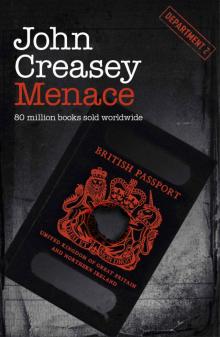 Menace (Department Z)
 Inspector West At Home
 The Toff In Town
 Murder: One, Two, Three
 Murder Must Wait (Department Z)
 The Toff In New York
 The Case Against Paul Raeburn
 An Uncivilised Election
 The Missing Old Masters
 Traitor's Doom (Dr. Palfrey)
 The Toff on Fire
 The Toff And The Stolen Tresses
 Meet The Baron tbs-1
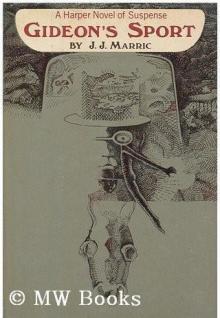 Gideon’s Sport g-1
 Shadow of Doom
 Accuse the Toff
 The Terror Trap (Department Z Book 7)
 Gideon's Day
 Dead or Alive (Department Z)
 Death Stands By (Department Z)
 Death by Night
 Gideon's River
 Call for the Baron
 The Toff And The Stolen Tresses t-38
 A Sharp Rise in Crime
 Murder, London--South Africa
 Death by Night (Department Z)
 Prepare for Action
 Strike for Death
 Poison For the Toff
 The Toff on The Farm
 The Toff and The Sleepy Cowboy
 Shadow of Doom (Dr. Palfrey)
 Thugs and Economies (Gideon of Scotland Yard)
 The House Of The Bears
 Criminal Imports
 Hang The Little Man
 The Toff And The Curate
 An Affair For the Baron
 Gideon's Night
 A Sword For the Baron
 Meet The Baron
 Kill The Toff
 Panic! (Department Z)
 Inspector West Alone
 From Murder To A Cathedral
 Shadow The Baron
 The Toff and the Deadly Priest
 Introducing The Toff
 The Day of Disaster
 The Baron Again
 The Theft of Magna Carta
 The Toff and the Fallen Angels t-53
 Salute the Toff
 Murder, London-New York
 Vigilantes & Biscuits
 Inspector West Alone iw-9
 The Toff and the Great Illusion
 Battle for Inspector West
 Impartiality Against the Mob
 A Mask for the Toff
 Cry For the Baron
 The Depths
 A Case for the Baron
 The Toff at Camp
 Gideon Combats Influence
 The Toff and The Sleepy Cowboy t-57
 Carriers of Death (Department Z)
 Kill The Toff t-23
 A Backwards Jump
 Reward For the Baron
 The Smog
 Famine
 Send Superintendent West iw-7
 The Toff And The Curate t-12
 Hide the Baron
 The Masters of Bow Street
 An Apostle of Gloom
 The Death Miser (Department Z Book 1)
 The Insulators
 Not Hidden by the Fog
 No Relaxation At Scotland Yard
 A Conference For Assassins
 Gideon’s Sport
 The Flood
 The Black Spiders
 The Baron at Large
 The Mask of Sumi
 The Riviera Connection
 The Toff and The Lady
 Here Comes the Toff
 The Toff and the Kidnapped Child
 Alibi for Inspector West