
- Home
- John Creasey
Sabotage Page 13
Sabotage Read online
Page 13
“I don’t follow you,” said the Minister of Supply.
“Go on,” said Hershall keenly.
“This way, sir,” said Loftus. “The most important men in the Food Ministry, outside the Minister, are Sir Bruce and the regional directors. They have a comprehensive knowledge of the arrangements in their districts, and they can put their hands on the detailed storage and transfer arrangements at any moment. If any one of them could be frightened sufficiently to pass on that information, the receiver of it would destroy a whole area—one sixth of the country’s food reserve.” He paused, and looked away from Hershall, conscious of Mortimer’s impressed, certainly startled stare.
Hershall said calmly:
“I see. It’s interesting. But could any one of the gentlemen be so easily frightened?”
“From my knowledge of them it is impossible,” said Mortimer slowly. “They would resign rather than do it.”
“I don’t know,” said Loftus. “The threat of death is a pretty potent weapon—certain death, that is, like Arkeld’s. It would take more than ordinary courage to resist. And there is one thing that has perhaps been overlooked. We know of the events of the past two days—but do we know whether any of the regional directors have been subjected to a long period of personal menace?”
“I don’t believe that any of them would have dealings with our enemy in any circumstances,” and Mortimer sharply.
Loftus shrugged: “I’ve merely submitted a possibility, and one which I think should be followed up,” he said. He looked into the Prime Minister’s eyes, and Hershall returned the stare. “It means a complete check on the activities of all the regional directors during the past year, sir, and I think it can only be done by asking their cooperation.”
Mortimer exclaimed: “That’s impossible!”
Hershall looked round at him.
“Nothing’s impossible, Mortimer,” he said mildly. “I think Loftus is right. What exactly do you want to do?”
“Ask each one whether he has received direct or indirect threats. There’s no time to lose, sir.” Loftus smiled a little, and then turned a bland and gentle stare on Sir Bruce Mortimer. “Have you been threatened, Sir Bruce?” he asked mildly, and when he finished every eye turned towards the Director-General, and for a while there was silence.
It grew strained the longer it remained unbroken.
16
Effects of Fear
The first movement after Loftus’s question was from Hershall, who took his cheroot case from his pocket and deliberately chose one. It happened that the Minister of Supply and the other War Cabinet members were on one side of the room, behind Loftus or at least out of his sight, and only Mortimer, Hershall and Craigie were clear in his line of vision. He watched the Director-General closely. It was possible that the man was merely showing his displeasure, and that he would rap out a crisp disclaimer when he had waited long enough.
The Prime Minister might have been expected to get impatient, for it was not yet six o’clock in the morning, and he had been roused an hour before. He did not; Loftus had come to believe that Hershall was a man who always did exactly the right thing.
When he broke the silence it was mildly:
“Would you rather think it over, Mortimer?”
That worked, for the Director-General’s fixed, glassy stare broke, and he sat back a little in his chair.
“It has been an extremely worrying time,” he said. “Extremely worrying. Loftus’s suggestion has taken me very much by surprise. However, I know that I can rely on anything I said being treated in full confidence.”
“Of course,” said Hershall.
“Thank you. You may know that I am a collector of emeralds—I might say that the hobby was the most important thing in my life until I was given the opportunity of serving my country.” He spoke a little stiffly, as if to play down all sentiment. “In the collecting of precious stones one comes across strange people and strange things. About a year ago the famous Keltov Emeralds were on the market, and I bought them—at what was, I will admit, a ridiculously low price. Before I did so, I was telephoned and told that I would pay at least double that amount I offered, or that I would lose my life.” Mortimer spoke in a dry voice which gave the story a strange dramatic quality. “I have been threatened before—any collector will tell you that when family heirlooms change hands, cranks in the family will say and do absurd things.”
Loftus broke in quietly: “May I suggest something else?”
“What is it?” asked Mortimer.
“You had advanced a certain sum on these stones, and bought them in when interest was not maintained?”
Mortimer swallowed an invisible lump in his throat.
“That is so. It was a business matter and I dealt with it as such. But from that time onwards I was constantly harried, by telephone and by letter. It was not a matter which I wished to pass on to Scotland Yard, but I will admit that I was worried. I—I had an idea of the actual complainant,” he went on, and there was perspiration on his forehead. “That was why I did not hand the matter over to the authorities. Understand that nothing has actually been done, but—it has made it necessary to live in a constant atmosphere of tension. I lost myself only when I was immersed in my work, but the matter came to a head about a week ago.”
They waited when he paused, and there was a general exclamation when he said:
“I sent the Keltov Emeralds back to their original owner, without any request for a return of the loan. I did not mention it. I believed that I would then be free of complications, and could apply myself fully to my work. I was worried by the trouble with Arkeld, you understand. But—the threats continued.”
He broke off abruptly. Hershall looked at him, and his expression was both thoughtful and understanding.
“That was a nasty experience, Mortimer. We won’t ask you now to substantiate the facts, of course, I know that they’re quite true. You’ve no objection to Mr. Loftus asking questions?”
“Naturally not.’
“The only questions I need to ask can be put later,” smiled Loftus, “and in the meantime Sir Bruce might care to draft out the essential factors—the names of the people concerned, and of all who may have known of the transaction. There is just one thing—were any demands made on you after you returned the emeralds?”
“No,” said Mortimer. “There were threats—vague and yet disturbing. It—it was suggested that I should retire from the Ministry. Of course, I should have reported this in due course, but I did not realise until tonight that it could be in any way connected with the graver issues.”
“Of course not.” Hershall was still soothing. “And you’ll do that draft?”
“Yes, immediately.”
“That’s good,” said Hershall. “Let me know what happens as soon as you can, Loftus.”
Loftus and Craigie were the first to leave Number 10. The dawn was already showing grey in the skies, and a surprising number of people were about. The usual police and military guard over the Prime Minister’s house was there, of course, grim figures in the raw light.
Craigie and Loftus walked to the Department office. As they went Craigie asked quietly:
“What gave you that idea, Bill?”
“It was a combination of pointers,” said Loftus slowly. “I first had a feeling when I was at the conference that they were all on edge. I wondered why, although I put it down to the death of Arkeld and the explosion. But a talk with Miller made it clear that the explosion could not have done any serious harm to anyone in the conference room, and had that been intended it could have been contrived. You follow?”
“Yes, go on.”
“Well, it looked as if someone was trying to throw a scare into them. And Arkeld’s death could have been intended for the same thing. I spent some hours trying to work it out last night, and came finally to the conclusion that if the regional directors or area commissioners were frightened of something they might be more easily persuaded to talk. Not all of
them, but some of them. And there’s a skeleton in every cupboard,” he added more lightly. “Our job is to find out what it is. We can’t go slowly, now—direct approach is the only thing that matters. I’ve been looking through the general reports you’ve given me,” he added as they reached the entrance to the building. “There are duplicate records in twenty places of the location of storage dumps for food—but the records are in every case complete. Golt—if our man is Golt—needs to find only one of those duplicates, and he knows the exact position of all our emergency supplies. If he can get one of the directors in a frame of mind to give him a duplicate—well, there you are.”
Craigie said quietly; “Let’s get upstairs.”
They went up in silence, and sat in easy chairs. The fire had burned low, but this time Craigie did nothing to mend it. He looked old and very grey as he fingered a meerschaum, but he did not take out his tobacco pouch.
“Two things, Bill. Do you think our man could be other than Golt?”
“Yes,” said Loftus.
“Why?”
“It’s early to say, and it will take time,” said Loftus. “What’s the other thing?”
“We have assumed up to now that the sole aim of all this intimidation is to get hold of a duplicate. But surely the events of the night suggest that he already has one!”
Loftus said: “I’m afraid he has.”
“Then he can use it for similar sabotage all over the country.”
“If we don’t stop him,” said Loftus quietly. “Gordon, I’m being annoying, I know, and making more mystery than there is, but if I started talking now I’d be at it all day. The whole affair is a series of vague shapes in my mind, and I think they’ll make a pattern before long, but not just yet. All right?”
Craigie smiled. “Yes, I won’t worry you. What are you going to do now?” he broke off, for Loftus lifted the telephone.
“Call the others.”
He telephoned Carruthers, and told him to tell the Errols and Thornton to go to the Landon Hotel. That done he looked at Craigie.
“Are you coming?”
“Send for me if you want me,” said Craigie. “I must get the details of the night’s work co-ordinated. They aren’t going to be good,” he added with a grimace.
Loftus smiled and nodded and went out.
As he drove to the Landon his thoughts were not of Hershall or of the Area Commissioners. They were of Craigie, and the fact that Craigie was tired. It was not so much a physical tiredness as a mental lassitude. It was obvious to Loftus that Craigie would have to take a spell of rest in the next few weeks, or he would crack. He thought that Craigie realised it, but fought against it.
Loftus did not know of a single week in the past ten years when Craigie had been free from some affair or other. Loftus drew up at the Landon.
In five minutes Carruthers had joined him, and in another ten, the Errols. Spats Thornton arrived almost on their heels. The reception clerk put a room at their disposal, and on their way to it they saw that workmen were busy putting right the walls which had been damaged by the explosion.
Once in the room, Loftus spoke quickly and to the point. Thornton was to be with him: the Errols and Carruthers were to be at the three ways of approach to the first floor passage off which the bedrooms opened. That settled, Loftus and Thornton gave the others time to get to their places, and then made their own way to the suite where Lord Brelling was sleeping.
He tapped on the door, and a valet opened it. Loftus showed his card. The man protested that his Lordship was asleep, but Brelling raised no objection when he was awakened. He looked tired but he was affable enough as he nodded to them.
“Well, what’s it all about?”
Loftus told him of the night’s disasters. Brelling’s smile disappeared, and so did his sleepiness. He made little comment, but was swearing lustily when Loftus finished.
“The Department is doing its best,” Loftus assured him. “A theory has been advanced that the organiser of the sabotage is using a simple weapon for getting information—fear, in short. We’ve got to find him. We think you can help us.”
“What do you think I’m afraid of?” demanded Brelling.
“I don’t know,” said Loftus, and then gently: “I didn’t even suggest the weapon was being used against you.”
Brelling stretched his hands for cigarettes.
“I’m not scared, Loftus, but you’re a clever devil. I’ve had a lot of trouble with threatening letters and telephone calls. Had ’em ever since I can remember. My method is to put ’em in the waste paper basket and ignore ’em. There was a time when I went to the police, but I gave that up.”
“Have they grown more insistent?”
“The last I had demanded that I should retire—or be killed,” Brelling said drily.
“A letter or a phone call?”
“A phone call.”
“Have you any idea who sent it?”
“No,” said Brelling, “but the voice was very deep—I could hardly understand the words at first. I—what’s the matter, Loftus? You look startled.”
“Startled is one word,” said Loftus. “Satisfied is another. It gives us some help, and we want it badly. You’ve no idea at all, you say, who might be threatening you?”
“Not the faintest.”
“What has been the excuse?”
Brelling shrugged. “That I make too much money. Disgruntled shareholders and these people and that—you don’t need telling they exist, I suppose?”
“No,” said Loftus. “But if you can I’d like a summary of the numbers of threats and anything interesting about them, during the past three months. Will you prepare that for me?”
Brelling nodded. “All right. I suppose you know you’ve ruined my night’s rest,” he added good-humouredly.
“Quite a hearty,” murmured Thornton, as they left the apartment. “Do you believe he’s quite as disinterested as he appears to be?”
“We’ll find out,” said Loftus.
He was surprised to find that Sir Augustus Gray was up and fully dressed. The south-eastern director was in riding-clothes, and he looked surprised when he saw Loftus and Thornton—and a little annoyed.
“Well, what’s all this about?” He was abrupt.
Loftus told him, going through the same routine as with Brelling, Gray had been standing for the beginning of the story, but slowly he backed to a chair, and sat down. He looked more worried than Brelling had done—in fact he looked a man for whom nothing could make up for the disasters of the night.
Loftus said: “And it is obvious that one of the duplicate reports has got into the wrong hands. It isn’t a thing that could be stolen easily, but it could have been given.”
“Don’t talk out of the back of your head,” snapped Gray, but there was no sting in his voice. He hesitated for some seconds, and then continued jerkily:
“I have been approached for a copy, Loftus. A private matter has been causing me some trouble—in short, blackmail. I’m not going to beat about the bush. A woman. Letters.” He stood up and tapped his riding-crop against his breeches. “I was offered them for a copy.”
“Yes?”
“Turned it down, of course,” said Gray. “Disturbing, all the same. I didn’t want the matter to become public, but if it must it must. I’ve heard nothing since.”
“When was this?”
“A week ago.”
“Was it telephoned?”
“Yes, by a man with a remarkably deep voice.”
“Ah,” said Loftus. “Well, all being well the gentleman won’t trouble you again.”
Gray brushed a hand over his thinning hair.
“I won’t go out,” he said. “I’ll be here if I’m wanted.”
Loftus thanked him, and went to Sanderson’s room. Sanderson was asleep, but showed no annoyance at being awakened. He heard Loftus out gravely, and then began to collect his shaving gear.
“I must get up,” he said. “This is bad, Loftus.”
Evading the question, Loftus went along to Whittaker’s suite. He had left the Scottish regional director until last because he expected more difficulty from him than from any of the others. In this he was right, for the difficulty started early. There was no reply to his knock, nor any response when the telephone operator rang his bedside telephone.
The door was locked.
Loftus sent for the floor waiter. It was Farrow, who showed no surprise or recognition, but obediently tried his his master-key. The lock turned, but the door was bolted.
“We’ll have to have it down,” said Loftus quietly.
He sounded worried, and Thornton knew that he was afraid that some harm had come to Whittaker. A quick trip to the Errols and Carruthers brought the assurance that no one had passed in or out of the area, and Loftus returned to Whittaker’s door. He needed only to exert his full weight once before the door went in, and he stumbled forward into the room.
It was empty, but the bedroom door was ajar.
Loftus stepped through, finding it difficult to control his fears, and with a vision of Arkeld’s face clear in his mind’s eye. But he did not find Whittaker dead.
He did not find him unconscious.
And worse; the Scottish regional director was stripped to the waist, and his wrists were fastened to the head-panel of the bed. His head was lolling on to his chest, and it was his chest which made Loftus tighten his lips, and brought an exclamation from Thornton, for it was burned in a dozen places, and the ugly, reddish-browned marks of the burns were fresh.
Loftus went forward quickly, and raised the man’s head. He was not surprised to find a gag in his mouth, and he took that out gently, while Thornton telephoned for a doctor, a Dr. Little, who had often done confidential work for the Department. Between them they unfastened Whittaker’s thin, bony arms, and rested him on the bed so that his body relaxed.
 Feathers for the Toff
 The Unfinished Portrait
 The Case of the Innocent Victims
 Love for the Baron
 Death of a Postman
 The Department of Death
 A Note From the Accused?
 If Anything Happens to Hester
 The Stolen Legacy
 The Doorway to Death
 Into the Trap
 Look Three Ways At Murder
 A Part for a Policeman
 The Terror Trap
 A Good Read
 The Legion of the Lost
 Sport For Inspector West
 Double for the Toff
 Nest-Egg for the Baron
 The League of Dark Men
 The Executioners
 Blood Red
 Last Laugh for the Baron
 The Toff and the Runaway Bride
 Model for the Toff
 The Warning
 Traitor's Doom
 The Arrogant Artist
 The Chinese Puzzle
 Darkness and Confusion
 Sabotage
 The Toff Breaks In
 Hunt the Toff
 Thunder in Europe (Department Z Book 6)
 The Extortioners
 Murder, London--Miami
 The Scene of the Crime
 Sport For The Baron
 Death in Cold Print
 Inspector West At Home iw-3
 Murder, London--Australia
 The Toff and The Lady t-15
 Give a Man a Gun
 Held At Bay
 The Man Who Stayed Alive
 Inspector West Takes Charge
 The Toff and the Fallen Angels
 Redhead (Department Z Book 2)
 Help From The Baron
 Alibi iw-39
 Go Away to Murder
 Attack and Defence
 The Baron Goes East
 Inspector West Regrets
 Gideon's Art
 Seven Days to Death
 Hammer the Toff
 Good and Justice
 Taking the Blame
 The Island of Peril (Department Z)
 The Toff and the Terrified Taxman
 Stars For The Toff
 The Toff and the Deep Blue Sea
 The Blood Diamond
 Go Away Death
 The Touch of Death
 Sport, Heat, & Scotland Yard
 Gideon's Fire
 John Creasey Box Set 1: First Came a Murder, Death Round the Corner, The Mark of the Crescent (Department Z)
 Send Superintendent West
 The Unbegotten
 The Baron Returns
 The Figure in the Dusk
 Triumph For Inspector West iw-7
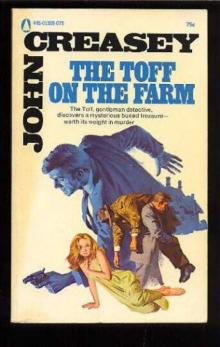 The Toff on The Farm t-39
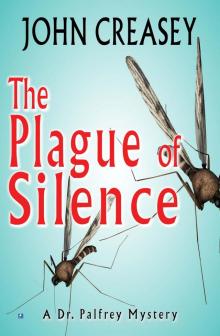 The Plague of Silence
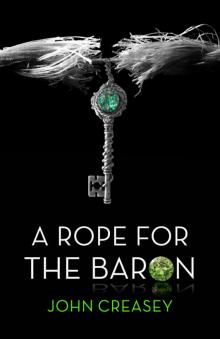 A Rope For the Baron
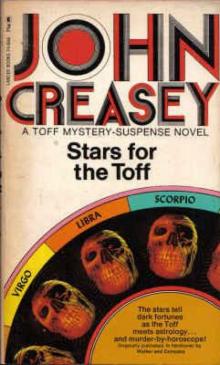 Stars For The Toff t-51
 So Young, So Cold, So Fair
 Triumph For Inspector West
 Menace (Department Z)
 Inspector West At Home
 The Toff In Town
 Murder: One, Two, Three
 Murder Must Wait (Department Z)
 The Toff In New York
 The Case Against Paul Raeburn
 An Uncivilised Election
 The Missing Old Masters
 Traitor's Doom (Dr. Palfrey)
 The Toff on Fire
 The Toff And The Stolen Tresses
 Meet The Baron tbs-1
 Gideon’s Sport g-1
 Shadow of Doom
 Accuse the Toff
 The Terror Trap (Department Z Book 7)
 Gideon's Day
 Dead or Alive (Department Z)
 Death Stands By (Department Z)
 Death by Night
 Gideon's River
 Call for the Baron
 The Toff And The Stolen Tresses t-38
 A Sharp Rise in Crime
 Murder, London--South Africa
 Death by Night (Department Z)
 Prepare for Action
 Strike for Death
 Poison For the Toff
 The Toff on The Farm
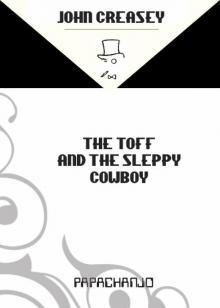 The Toff and The Sleepy Cowboy
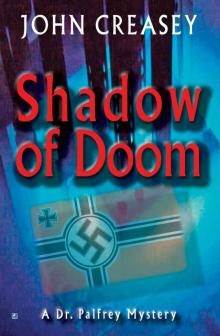 Shadow of Doom (Dr. Palfrey)
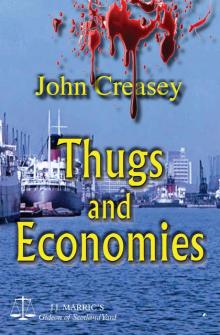 Thugs and Economies (Gideon of Scotland Yard)
 The House Of The Bears
 Criminal Imports
 Hang The Little Man
 The Toff And The Curate
 An Affair For the Baron
 Gideon's Night
 A Sword For the Baron
 Meet The Baron
 Kill The Toff
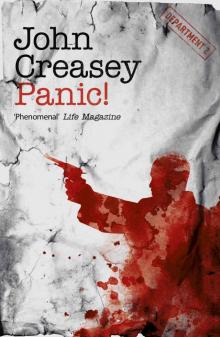 Panic! (Department Z)
 Inspector West Alone
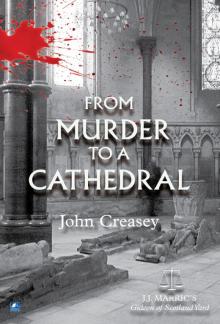 From Murder To A Cathedral
 Shadow The Baron
 The Toff and the Deadly Priest
 Introducing The Toff
 The Day of Disaster
 The Baron Again
 The Theft of Magna Carta
 The Toff and the Fallen Angels t-53
 Salute the Toff
 Murder, London-New York
 Vigilantes & Biscuits
 Inspector West Alone iw-9
 The Toff and the Great Illusion
 Battle for Inspector West
 Impartiality Against the Mob
 A Mask for the Toff
 Cry For the Baron
 The Depths
 A Case for the Baron
 The Toff at Camp
 Gideon Combats Influence
 The Toff and The Sleepy Cowboy t-57
 Carriers of Death (Department Z)
 Kill The Toff t-23
 A Backwards Jump
 Reward For the Baron
 The Smog
 Famine
 Send Superintendent West iw-7
 The Toff And The Curate t-12
 Hide the Baron
 The Masters of Bow Street
 An Apostle of Gloom
 The Death Miser (Department Z Book 1)
 The Insulators
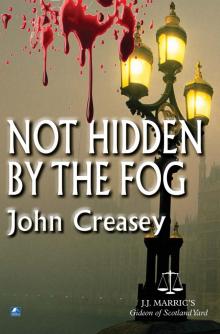 Not Hidden by the Fog
 No Relaxation At Scotland Yard
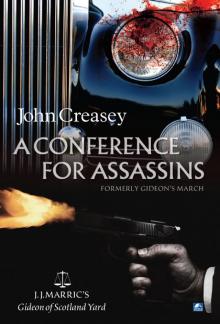 A Conference For Assassins
 Gideon’s Sport
 The Flood
 The Black Spiders
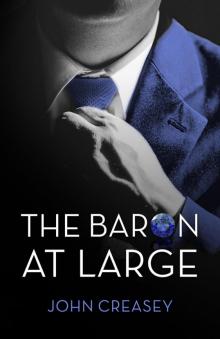 The Baron at Large
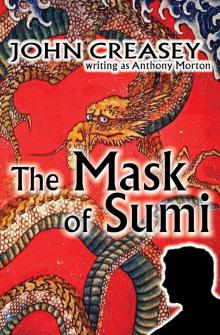 The Mask of Sumi
 The Riviera Connection
 The Toff and The Lady
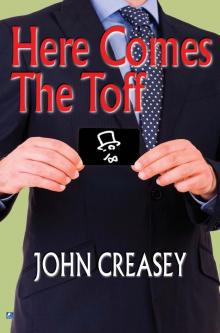 Here Comes the Toff
 The Toff and the Kidnapped Child
 Alibi for Inspector West